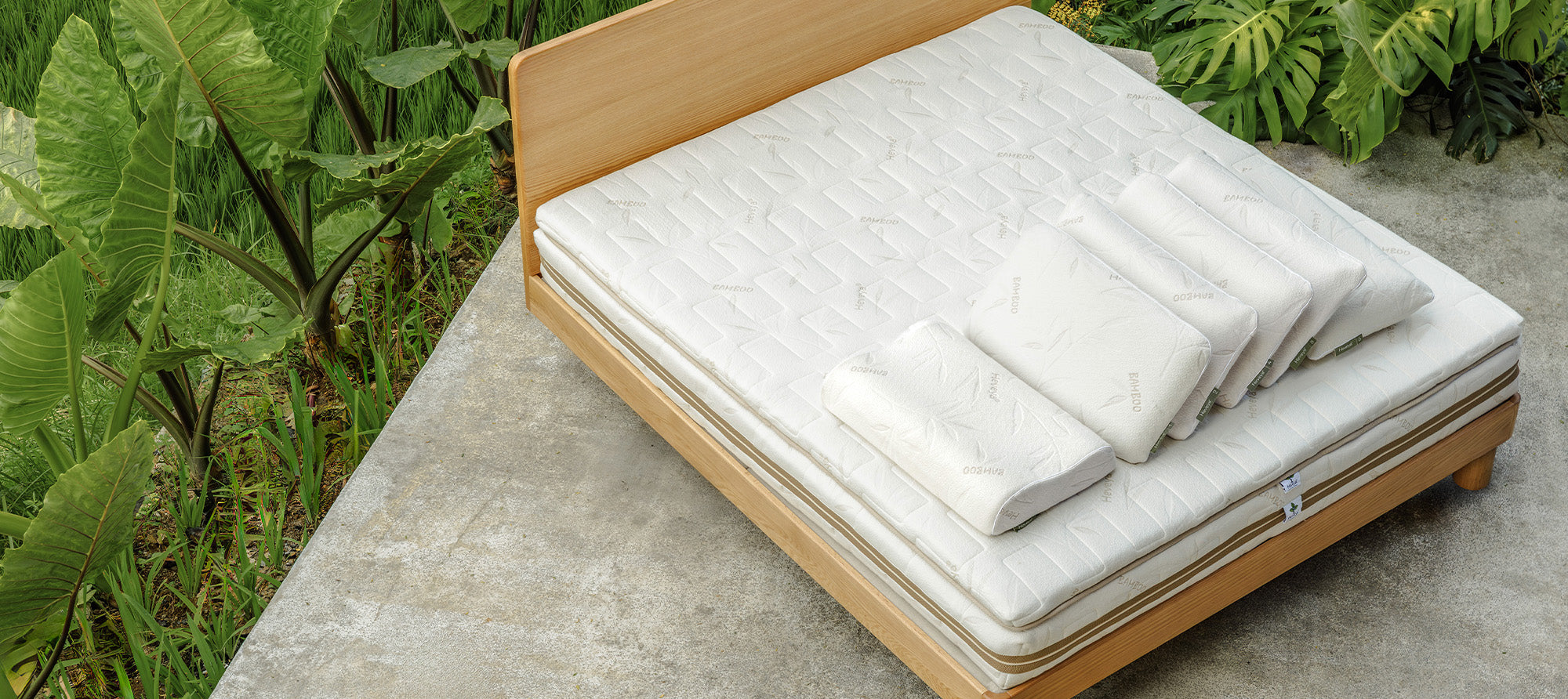
“A pillow is a piece of clinical equipment rather than a soft furnishing. It supports the most mobile part of our spine for a third of our life.”
We spend around a third of our lives asleep, yet the way we position and support our bodies during those hours is often overlooked. Kris Rai, osteopath and founder of Joint Space in Dubai, explores why sleep posture matters, how the right pillow supports spinal alignment, and why waking up pain-free starts with looking at the bigger picture.

Quick Overview
- The Connection Between Sleep and Pain
- Why the Right Pillow Matters for Neck & Spine Alignment
- How to Find the Right Pillow for Your Sleep Position
- Looking Beyond the Pillow
- What Healthy Sleep Really Means
Kris Rai is an osteopath and the founder of Joint Space, an integrative clinic in Dubai where osteopathy sits alongside functional medicine, movement and rehabilitation. His interest in the human body began through movement and sport, particularly the question of why two people can experience the same physical demands yet respond in completely different ways.
That curiosity eventually led him to osteopathy and to an approach that sees the body not as a collection of separate parts, but as one connected system constantly adapting to the demands placed upon it.
“Pain is usually part of that adaptation,” Kris explains. “Once we see it that way, the interesting question stops being what is broken and becomes what this person’s life is asking of them.”
The Connection Between Sleep and Pain
Seven or eight hours a night adds up quickly. As Kris points out, no exercise programme or treatment plan comes close to the amount of time we spend in our sleeping position. Poor sleep posture may not necessarily create a problem on its own, but it can maintain one by repeatedly irritating the same tissue night after night.
Kris regularly sees patients experiencing stiff necks and headaches that ease after the first hour or two of the morning. Shoulder pain among side sleepers, lower-back discomfort on waking and numbness or tingling through an arm during the night are also common.
Sometimes, sleep is not the obvious complaint at all. People may arrive at the clinic with persistent discomfort that has not responded as expected to rehabilitation, only to discover that the way they spend their nights is one factor that has never been considered.

Why the Right Pillow Matters for Neck & Spine Alignment?
A pillow has one fundamental job: to fill the space between the head and the mattress so the neck remains aligned with the rest of the spine. Our head weighs around five kilograms and rests on one of the most mobile and exposed parts of the spine.
If the pillow is too high, the neck can be pushed into flexion or side bending. Too low, and it can fall in the opposite direction.
One of the biggest mistakes people make is choosing a pillow based solely on how comfortable it feels in the first few seconds.
“A pillow that feels lovely in the first ten seconds tells you very little about where your neck will be at three in the morning.”
Softness and support are also not the same thing. A pillow that completely compresses under the weight of the head may feel comfortable initially but offer little support as the night progresses. Equally, an excessively firm pillow is not automatically better, particularly if its height is already pushing the neck out of alignment.
Instead, the goal is balance: something comfortable enough to rest on while maintaining the structure needed to support the head and neck throughout the night.
How to Find the Right Pillow for Your Sleep Position
There is no universal pillow because there is no universal sleeper. Sleeping position, shoulder width and mattress firmness all influence the support a person needs.
Side sleepers generally require a higher pillow to fill the space between the ear and shoulder, with broader shoulders typically requiring more height. Back sleepers need considerably less, just enough to support the natural curve of the neck without pushing the head forward.
For stomach sleepers, Kris generally recommends keeping the pillow as low as possible, as the neck already needs to rotate to allow comfortable breathing.
The mattress underneath also changes the equation. A softer mattress allows the shoulder to sink further into the surface, reducing the space that the pillow needs to fill. A firmer mattress keeps the shoulder higher, creating a larger gap and potentially requiring a higher pillow.
This is why a pillow that feels perfect on one mattress may suddenly feel wrong on another.
There are also simple signs that your current pillow may no longer be supporting you properly. Regularly folding or rearranging it, placing your hand underneath it while sleeping, or waking with stiffness or headaches can all be worth paying attention to.
And there is one particularly simple test. If you press the pillow flat and it stays flat rather than returning to shape, it has stopped doing its job.

Looking Beyond the Pillow
While the right pillow can support better alignment and recovery, Kris is clear that no pillow can compensate for everything that happens during the day. The mattress establishes the foundation, but movement, desk posture, stress, temperature, screen use and daily habits all influence how well the body recovers overnight.
Stress is particularly important because it can increase muscle tone around the neck, jaw and shoulders. That tension can make sleep lighter, while poor sleep can in turn lower the nervous system’s threshold for pain the following day.
“They form a single loop, and it runs in both directions,” Kris explains.
This is why he prefers to look at the shape of someone’s entire day and night rather than repeatedly treating one painful area in isolation.
Better sleep also begins before getting into bed. Creating a proper transition between the activity of the day and rest: dimming the lights, putting screens away and allowing the bedroom to cool so the nervous system has time to recognise that the day has ended.
For side sleepers, there is also one simple adjustment worth trying: placing a pillow between the knees to reduce strain through the pelvis and lower back.
What Healthy Sleep Really Means
For Kris, healthy sleep is not simply about accumulating enough hours. It is sleep that restores rather than merely passes, falling asleep without a struggle, remaining asleep through most of the night and waking without needing an hour to feel like yourself again.
But perhaps most importantly, healthy sleep is not something that exists independently from the rest of our lives.
“Healthy sleep is a consequence rather than a project. It reflects how the whole day was lived, how much real movement there was, how much daylight, how much unresolved stress.”
When those pieces are working together, sleep has the opportunity to do what it is designed to do: restore the body and prepare it for another day. And considering we spend around a third of our lives doing it, the way we support ourselves during those hours deserves far more attention than we often give it.
FAQ
1. Are soft pillows good for you?
Not necessarily. Softness feels comfortable at first, but comfort and support are different things. A pillow that compresses completely leaves the neck unsupported for the rest of the night. What matters is a surface that feels pleasant while still resisting enough to keep the head level.
2. Is it healthy to sleep with two pillows?
Usually not. Two pillows tend to push the head forward into flexion, straining the neck and the muscles at the base of the skull. It's often a sign one pillow is too low, so a single pillow of the right height is the better fix. One exception: a pillow between the knees for side sleepers helps take strain off the lower back.
3. How do you know if you have the wrong pillow?
Common signs include waking with a stiff neck or headache, sliding a hand under the pillow during the night, or constantly folding and rearranging it. A simple test: press the pillow flat, if it stays flat instead of springing back, it's no longer doing its job.


