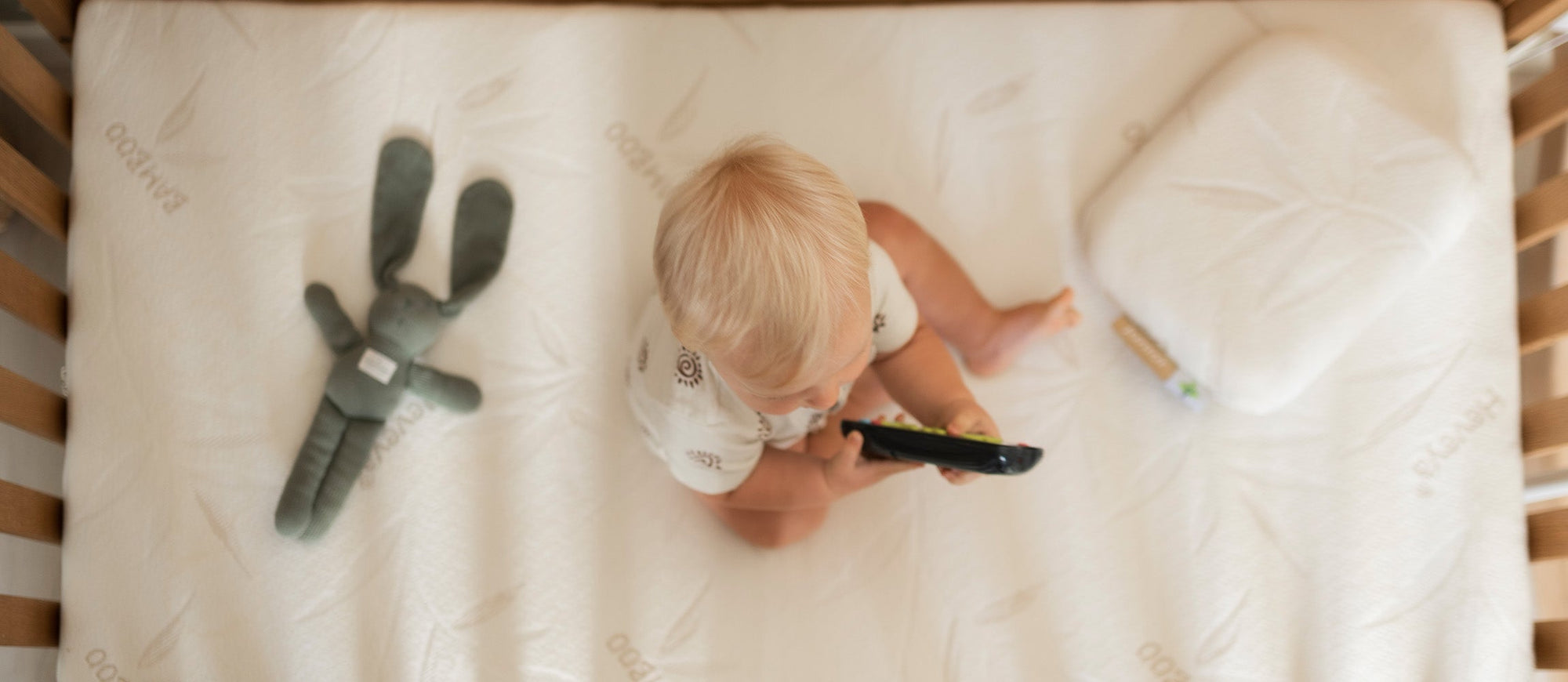
“The first months are a period of extraordinary sensory adjustment. Every thoughtful choice you make in that room from the baby cot mattress beneath them to the air they breathe supports their sense of safety.”
Cecile de Scally is a Lead Parent Educator at Malaak Mama & Baby Care, with decades of experience supporting families through pregnancy, newborn care, breastfeeding, sleep routines and early parenthood. Known for her warm and reassuring approach, Cecile has guided countless parents across the UAE with practical support designed to help families feel more confident, calm and connected throughout their parenting journey.
In this guide, Cecile shares gentle and practical insights into creating healthier sleep environments for babies and young children. From understanding safe sleep positions and bedtime routines to choosing breathable bedding, calming sensory environments and sleepwear, the guide explores how small adjustments in a child's surroundings can support deeper, safer and more restful sleep for the whole family.

Quick Overview
- Your Baby’s First Sleep Environment: Understanding the transition from womb to world.
- The Importance of a Non-Toxic Baby Cot Mattress: Why breathable, natural materials matter for healthy sleep and development.
- Choosing the Right Bedding and Sleepwear: The role of bamboo fabrics, layering and breathable materials in preventing overheating.
- The Invisible Sleep Environment: How lighting, white noise, scent and sensory input affect your baby’s ability to settle and rest.
- The ABCD Principles of Safe Sleep: Simple guidelines to reduce risks and create a safer sleep space for your baby.
When you become pregnant, the nursery naturally becomes one of the most exciting rooms to plan. The colours, the furniture, the little details that make it feel like home. But one of the most important considerations and often the least talked about, is where and on what your baby will actually sleep.
A nurturing sleep environment goes far beyond a beautiful cot. It encompasses everything your baby is breathing, touching and sensing during those precious hours of rest. In Dubai's climate, where air conditioning runs year-round and indoor environments are carefully controlled, the materials you choose matter more than ever. When you understand the environment where it all begins, it all makes much more sense.
Understanding your Baby's World Before Birth

Before your baby arrives, they spend months in the warmth, darkness and familiar sounds of the womb. It is dim, contained, and consistently warm. They hear the rhythm of your heartbeat, the sound of movement around them and the gentle swish of amniotic fluid. They feel held.
Then they are born into a world that is bright, loud and sometimes overwhelming. Once you are home, the goal is to gently ease that transition to recreate some of the safety and calm they knew, in a space that is clean, safe and free from unnecessary chemicals.
The Baby Cot Mattress is Where it All Begins
If there is one investment worth prioritising, it is the baby cot mattress. Your baby will spend more time on it than anywhere else in those early years, at least 15 hours a day in the newborn months. Choosing the best non-toxic crib mattress you can is one of the most meaningful decisions you will make for their health.
The ideal baby cot mattress offers firm elasticity, supporting your baby's developing spine and distributing weight evenly without creating pressure points. It should be completely free of harmful pesticides, heavy metals, VOCs and glues, ensuring that your baby is not absorbing toxins through their skin or breathing them in during sleep.
What to look for in a baby cot mattress
- 100% natural, non-toxic materials: Your baby is in direct contact with this surface for hours at a time
- A removable, washable cover: Bamboo is ideal for its hypoallergenic and cooling properties
- Firm but not rigid: The mattress should not indent under your baby's head, which supports open airway position and reduces suffocation risk
- Ventilation holes: These allow air to circulate freely, keeping your baby's sleep surface cool and comfortable
- Free from metal springs: Metal-free construction eliminates electromagnetic radiation risk
- Longevity: A well-made baby cot mattress will see your child through infancy and well beyond
Natural organic latex is the material of choice for parents who want the safest sleep surface for their baby. Harvested from the sap of the rubber tree, it has an open-cell structure that allows air to circulate far more freely than synthetic, blended, or petroleum-based polyurethane foams. This helps keep your baby's sleep surface cool and dry even in Dubai's air-conditioned interiors. Unlike memory foam, it does not develop to the shape of your baby's head, which matters greatly for airway safety. And because it is naturally resistant to dust mites, mould and bacteria without any added chemicals, it stays cleaner over time without extra effort from you.
Is a latex baby cot mattress hot to sleep on?
This is one of the most common questions from parents in the UAE. The answer is no, natural latex is one of the most breathable sleep surfaces available. Its open-cell structure, combined with ventilation holes throughout the core, allows constant air circulation. Paired with a bamboo cover (which is naturally moisture-wicking and temperature-regulating), a natural latex baby cot mattress actually sleeps cooler than most foam alternatives.
Choosing the Right Bedding and Sleepwear

A useful rule of thumb: dress your baby in one more layer than you would wear yourself, and choose a fitted sleep sack rather than loose blankets. In Dubai, where rooms are kept cool by air conditioning, this is especially relevant, a light bamboo sleep sack offers the right warmth without overheating.
Why bamboo for your baby's bedding
- Regulates temperature beautifully: Cooling in warm conditions, warming when cool, making it perfect for air-conditioned rooms
- 40% more absorbent than organic cotton, ideal for the early weeks when night sweats are common
- Naturally antibacterial and hypoallergenic: Particularly helpful for babies with sensitive skin or eczema
- Silky soft with a texture comparable to 1,000-thread-count cotton, gentle on delicate newborn skin
The Invisible Sleep Environment
Lighting
The colour temperature of light matters more than most parents realise. Blue and cool white light suppresses melatonin, even brief exposure during a night feed can disrupt your baby's natural sleep cycle. Red and amber light have the least impact on both you and your baby during feeds or nappy changes. For general nursery lighting, choose warm white bulbs between 2700K and 3000K.
Does white noise help babies sleep?
White noise helps babies sleep and it is one of the simplest and most effective tools available to parents. The womb is not a quiet place. Your baby is born accustomed to the constant low hum of a living body, and sudden sounds in a quiet room are far more disruptive than a consistent background noise. White noise (which masks external sounds like traffic or building noise) and pink noise (softer, like steady rain) are the most effective choices. Keep the volume around 50 decibels at crib level roughly the volume of a quiet shower, and place the machine at least 2 metres from your baby's head.
Scent
For the first three months, most experts recommend no added scents in the nursery. A baby's airways are still developing and artificial fragrances can be irritating. The most soothing scent for your newborn is simply yours. Sleeping with your baby's cot sheet for a night or two before using it transfers your scent and can help them settle more easily.
The Essentials for Safe Sleep
The ABCD principle is a helpful framework to keep top of mind for every sleep, every time.
Alone
Your baby sleeps in their own space, free of pillows, soft toys, bumpers and loose blankets. Room-sharing with parents (not bed-sharing) reduces SIDS risk by up to 50%.
Back
Always place your baby on their back to sleep. The reflexes that keep airways open work best in this position. Swaddling is safe until around 4 months, when rolling begins.
Crib
Use a safety-approved cot with a firm, flat baby cot mattress and only a well-fitted sheet. No padding, nests, or bumpers. The mattress should not indent under your baby's head.
Don't Smoke
Keep the sleep environment entirely smoke-free. Exposure to smoke is one of the most significant SIDS risk factors.
Safe sleeping position
Until your baby can roll over independently, always place them on their back to sleep. This is the single most important safe sleep guideline. The back-sleeping position keeps the airway open and reduces the risk of SIDS significantly. Once your baby begins rolling on their own (usually around 4–6 months), they may naturally shift position during sleep, which is generally considered safe.
Temperature in Dubai's air-conditioned homes
Aim for 20–22°C in your baby's room. In Dubai, where air conditioning runs throughout the year, this is easy to maintain, but there are a few important things to keep in mind. Never direct airflow onto your baby's cot and avoid placing the cot directly under or in the path of an AC vent. The sudden temperature change can be harmful. Dress your baby in one layer more than you would wear and skip the hat once indoors, hats can cause overheating quickly even in cool rooms.
What should not be in the cot
- Pillows, nests, bumpers, or mattress padding
- Soft toys or positioners
- Loose blankets (a fitted sleep sack is the safer alternative)
- Teething necklaces or dummy chains
A nurturing sleep environment does not need to be complicated. The principles are simple: a natural, non-toxic baby cot mattress; breathable, hypoallergenic bedding; muted sensory input; and a clear, safe sleep space. The first months are a period of extraordinary adjustment for your baby — every thoughtful choice in that room supports their sense of safety, comfort, and rest. It is one of the most loving things you can do for them before they even arrive.


