Intermittent fasting has become one of the most widely practised wellness habits across the world, from the health-conscious communities of Dubai and the wider Gulf region to busy professionals managing their routines in cities everywhere. People fast for metabolic benefits, mental clarity, and weight management. But one question keeps coming up: does intermittent fasting affect sleep quality? The relationship between what you eat, when you eat, and how well you rest is more connected than most people realise. If you have ever found yourself lying awake on an empty stomach, or sleeping more heavily than usual during a fasting period, you are not imagining it. Your body's internal clock and your eating window are in constant conversation.
Quick Overview
- Intermittent fasting can influence sleep quality depending on the eating window you choose and your body's response.
- Meal timing directly affects your circadian rhythm, the internal clock that governs your sleep-wake cycle.
- Eating too close to bedtime disrupts the body's natural preparation for sleep.
- Some fasting protocols can improve sleep depth and consistency, while others may cause restlessness if not managed well.
- Your sleep environment plays a critical role in how well your body recovers, especially during periods of dietary change.
What Intermittent Fasting Actually Does to Your Body Overnight
Intermittent fasting is not a single approach. The most common form is the 16:8 fasting method, where eating is confined to an eight-hour window and the remaining sixteen hours are spent fasting, including time asleep. Other approaches include the 5:2 method, alternate day fasting, and early time-restricted eating, where all meals are consumed before mid-afternoon.
During a fasting period, the body gradually shifts its energy source from circulating glucose to stored fat. This metabolic transition can influence several hormones linked to alertness and metabolism. In longer fasting periods or when calorie intake becomes too low, cortisol levels may rise slightly as the body mobilises energy reserves.
However, in structured intermittent fasting schedules such as 16:8, these hormonal shifts are generally mild and vary between individuals.
How Meal Timing Affects Your Circadian Rhythm
Your circadian rhythm is your body's internal 24-hour clock. It regulates sleep, hunger, hormone release, and body temperature in a carefully timed cycle. What many people do not realise is that this clock responds not only to light and darkness, but also to when you eat.
Food acts as a secondary time signal for your body. When you eat late at night, you send a conflicting message to your internal clock, essentially telling it that it is still daytime. This can delay the release of melatonin and push back the natural onset of sleep. Research published in 2024 from Ludwig-Maximilians-University in Munich in Munich found that participants following a 16:8 time-restricted eating protocol showed no significant disruption to total sleep duration or sleep architecture, suggesting that when intermittent fasting is structured sensibly, it does not negatively interfere with sleep patterns in healthy adults.
In regions where late evening meals are culturally common, such as parts of the Middle East and Southern Europe, this is particularly worth considering. Shifting the eating window earlier, even by one or two hours, can meaningfully reduce the circadian disruption that late-night eating causes.
When Fasting Can Help Your Sleep
Reduced Digestive Activity at Night
Digestion is an active process that generates heat and keeps several body systems working. When you eat your last meal two to three hours before bed, your body has time to complete the bulk of digestion before sleep begins. This allows core body temperature to drop more readily, which is one of the key biological triggers for deep, restorative sleep.
Improved Sleep Depth During Extended Fasting
Some researchers suggest that consistent eating windows may support better alignment between metabolism and the body’s circadian rhythm. Neurotransmitters involved in wakefulness, including orexin, help regulate alertness during the day and sleep pressure at night.
When eating patterns become more regular, daytime alertness and evening sleepiness can become more clearly separated. This may contribute to more consistent sleep patterns for some people, although individual responses to fasting vary.
Weight Loss and Sleep Apnoea Risk
For people carrying excess weight, intermittent fasting's role in supporting weight loss can indirectly improve sleep quality. Excess weight around the neck and throat is a contributing factor in obstructive sleep apnoea, a condition that fragments sleep and prevents the deeper stages of rest. As body weight reduces, this risk can decrease, leading to more consolidated, uninterrupted sleep over time.
When Fasting Can Disrupt Your Sleep
Not all fasting experiences are positive for sleep, and the reasons are worth understanding clearly. Fasting while under-eating, meaning consuming far fewer calories than the body needs, can trigger a mild stress response that elevates cortisol at night. Elevated cortisol is incompatible with restful sleep and is one of the more common reasons people report wakefulness or light, fragmented sleep during restrictive fasting periods.
Blood sugar regulation can also play a role in sleep quality. In some individuals, particularly when meals are very high in refined carbohydrates or when overall calorie intake is too low, fluctuations in blood sugar may occur overnight.
This can activate stress hormones such as cortisol in the early hours of the morning, which may contribute to early waking in some people. Balanced meals that include protein, healthy fats and moderate carbohydrates tend to support more stable overnight energy levels.
During Ramadan, which combines daytime fasting with significant changes to meal timing and sleep schedules, studies have observed shifts in sleep patterns for some individuals. Later evening meals, shorter sleep duration, and altered hydration habits can affect sleep timing and quality.
Being intentional about sleep hygiene and maintaining a consistent sleep environment becomes especially important during this period.
Practical Tips for Fasting Without Disrupting Your Sleep
Close your eating window at least two hours before you plan to sleep. This gives your body sufficient time to complete digestion and allows your core temperature to begin its natural descent. Avoid large, heavy meals as your final meal of the day. A lighter, well-balanced meal is easier to digest and produces less metabolic heat overnight.
Stay well hydrated throughout your eating window. Mild dehydration is a common and overlooked cause of restless sleep, and it becomes more relevant during fasting periods when the body loses the water that food normally provides. In hot climates like Dubai or tropical environments, fluid loss is higher and requires more deliberate attention.
Maintain a consistent sleep schedule regardless of your fasting window. Your circadian rhythm responds to regularity, and varying your bedtime significantly weakens its signal. Even if your eating window shifts slightly day to day, keeping your sleep and wake times stable gives your body the consistency it needs to regulate melatonin properly.
Why Your Sleep Environment Matters More During Dietary Change
When you are making changes to your eating patterns, your body is adapting. During this adaptation period, sleep quality can fluctuate, and the quality of your sleep environment becomes more important, not less. A mattress that regulates temperature effectively, bedding that breathes, and a surface that supports proper spinal alignment all contribute to the depth and continuity of sleep that your body needs to recover.
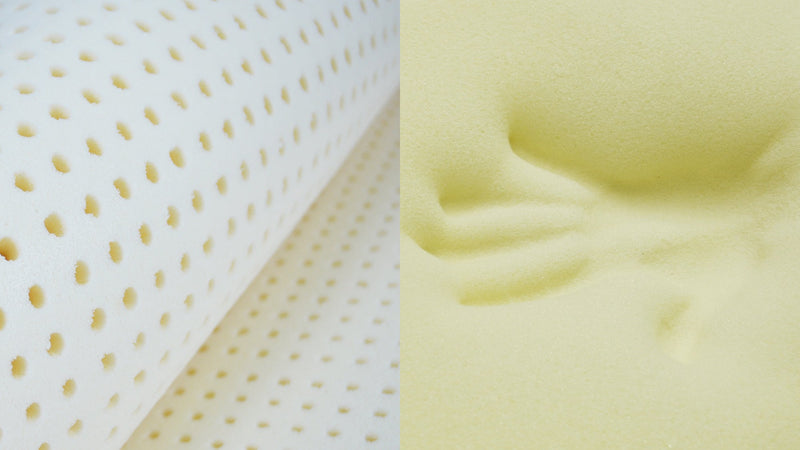
Natural organic latex mattresses are particularly well suited to this role. Their open-cell structure promotes airflow through the mattress, which helps regulate body temperature through the night. For people fasting in warm climates, where night-time temperatures remain high, a breathable sleep surface makes a measurable difference to sleep comfort. Breathable bedding made from natural fibres such as bamboo lyocell or European flax linen further supports temperature regulation by wicking moisture away from the body.

At Heveya, our mattresses and bedding are made from certified natural and organic materials, free from synthetic foams and chemical treatments. They are designed for people who take their sleep seriously and want their environment to support the health choices they are already making.
Ready to Support Your Sleep From Every Angle?
Good sleep is built on more than habits alone. If you are putting care into how and when you eat, it is worth putting the same care into where you sleep. Explore Heveya's range of natural organic latex mattresses and breathable natural bedding, designed to give your body the conditions it needs to rest deeply, recover fully, and wake up feeling genuinely refreshed. If you are not sure where to start, our sleep consultants are happy to help you find the right combination for your needs.